Abdul Sattar Edhi, subhanAllah we need more people like him. Support the campaign to have him awarded the Nobel Prize
Showing posts with label Sincerity. Show all posts
Showing posts with label Sincerity. Show all posts
Thursday, 29 March 2012


Saturday, 24 March 2012
Selfishness, Selflessness and the Modern World
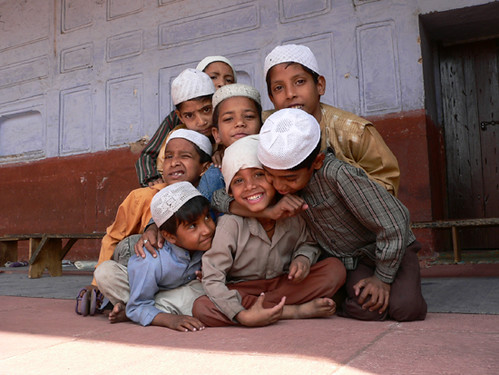 Innocent brotherhood
The selfish people (which is the norm in society, even amongst Muslims) struggle to overcome their selfishness (which includes their desires) if they try, and because of their ego, they think that if they can't do it (become selfless), then no one can. So they assume wrongly about the selfless people, deny their existence, and treat them like the selfless are selfish people. Since the Prophet said “A believer is a mirror of the believer.” [Abu Dawud], the selfish person is seeing his own selfishness in the other.
This leads to people who are struggling and want to be selfless, to be treated badly. They try to help others, and prefers others to themselves, and give sincere advice, yet the selfish person thinks "he must have a self-interest or bad intention in this, or must be weird, or let me just use him and ignore him when he's no use". Since these selfless people are often weak, the pressures and maltreatment of society makes them give up and think 'why should I be nice if everyone just uses me and thinks me as a fool if I'm nice?' Sometimes such struggling people might continue to fight the temptation to be selfish, but eventually they “crack” and convert. Even those who don't normally struggle, and are brought up as selfless people often convert to the selfish. Thus the cycle of selfishness is vicious and converts more of the selfless to the selfish, leading to the eventual destruction of humanity through its becoming like animals (actually even worse since many animals sacrifice themselves for their species).
However Allah swt has promised us, through the Prophet, that there will continue to be selfless, righteous, people on the Earth. They are exemplars of Islam, and the real representatives of the Prophet, reminding people of how it must have been at the time of the Prophet, and how humans can reach the highest of stations, through selflessness and proper following of Islam. This is despite the vast majority of society having fallen prey to their desires and selfishness. The selfless will succeed eventually. The Prophet said “The Abdal (the 40 best people alive) from my nation did not enter into Paradise with their actions, but rather through the mercy of Allah, through the unparalleled generosity of their souls, the fact that they hold no grudge or hatred against anyone and their hearts being at peace with everyone, and through mercy for the entirety of Muslims.” (Bayhaqi)
Look for the selfless people, the awliya (they can be male or female) so that their company helps improve you and make you of the selfless, and shows you that such people exist. If you look in the right place, you will insha’Allah find them.
Though the selfless are misunderstood and abused in society and are very rare, their status, rank, value and honour are elevated and make the best of people. It is like the more rare a diamond is, the higher its value.
The Qur'anic example (which is obviously real) that we should follow on selflessness is " …and give them preference over themselves even though they were in need of that" (59:9)
This leads to people who are struggling and want to be selfless, to be treated badly. They try to help others, and prefers others to themselves, and give sincere advice, yet the selfish person thinks "he must have a self-interest or bad intention in this, or must be weird, or let me just use him and ignore him when he's no use". Since these selfless people are often weak, the pressures and maltreatment of society makes them give up and think 'why should I be nice if everyone just uses me and thinks me as a fool if I'm nice?' Sometimes such struggling people might continue to fight the temptation to be selfish, but eventually they “crack” and convert. Even those who don't normally struggle, and are brought up as selfless people often convert to the selfish. Thus the cycle of selfishness is vicious and converts more of the selfless to the selfish, leading to the eventual destruction of humanity through its becoming like animals (actually even worse since many animals sacrifice themselves for their species).
The selfish trait is valued by society since it fulfills the desires/nafs (as a person gets what s/he wants and self-interests) and increases consumption/profits (that's why firms encourage selfishness) and leads to greater competition. Many of these selfish people are actually normally nice, they may help in a lot of charitable activities, or outwardly act Islamic, but actually they are selfish due to their inner feelings and actions towards other people, using them for their goals, and assuming bad about them without clear reason. They need the purify their hearts, through the Islamic science of tasawwuf.
However Allah swt has promised us, through the Prophet, that there will continue to be selfless, righteous, people on the Earth. They are exemplars of Islam, and the real representatives of the Prophet, reminding people of how it must have been at the time of the Prophet, and how humans can reach the highest of stations, through selflessness and proper following of Islam. This is despite the vast majority of society having fallen prey to their desires and selfishness. The selfless will succeed eventually. The Prophet said “The Abdal (the 40 best people alive) from my nation did not enter into Paradise with their actions, but rather through the mercy of Allah, through the unparalleled generosity of their souls, the fact that they hold no grudge or hatred against anyone and their hearts being at peace with everyone, and through mercy for the entirety of Muslims.” (Bayhaqi)
So those who want to be selfless, yet are selfish, should not judge other people, nor treat them as if they are selfish, since verily they could be of the Awliya, and you may not know the hidden states of that person. Rather assume the best in people (as long as reasonable), and if you start treating people selflessly, and reminder others of it, and propagate Islam (through words and actions, such as importance of keeping your word and honesty). And if you find them make mistakes, remember that Ibn Munazil said ““The believer seeks excuses for their brethren, while the hypocrite seeks out the faults of their brethren.””
Look for the selfless people, the awliya (they can be male or female) so that their company helps improve you and make you of the selfless, and shows you that such people exist. If you look in the right place, you will insha’Allah find them.
Though the selfless are misunderstood and abused in society and are very rare, their status, rank, value and honour are elevated and make the best of people. It is like the more rare a diamond is, the higher its value.
The Qur'anic example (which is obviously real) that we should follow on selflessness is " …and give them preference over themselves even though they were in need of that" (59:9)
Friday, 16 March 2012
Don't force Islam on me!
The time has come when people hate to be corrected, and they get offended when someone advises them, even in a nice way, that what they are doing is wrong and that they should follow the Islamic ruling and please Allah swt and His Prophet (Sallallahu alaihi wa sallam). And they make many excuses for not heeding the advice.
Enforcing beliefs on others would be where you threaten a person with death if they don't accept your beliefs. They are "forced" into one choice, they can't carry out any other act. As long as a person has the choice in this world, without having himself killed, its not considered 'forcing a belief'. After all, a person can even be in jail, and still believe in a certain thing, since belief is what you believe in the heart.
However if the case is of stopping a person from doing a certain act, then if the person is prevented by force (like put in jail), then one can claim that beliefs are being enforced in the realm of action. Nevertheless we should remember that every day actions or the prevention of actions are forced upon us. For example a person X wants to break the speed limit repeatedly or tries to murder, so he is arrested and forced to not break it or do murder, when he is in jail. And this is considered as "enforcing belief in the realm of actions" by the legal scholars, lawyers and government.Thus the claim that "no one can enforce beliefs" is blatantly false.
In fact the Prophet (Sallallahu alaihi wa sallam) gave the Islamic command to stop people from doing haram (the unlawful in Islam) when he said:
"Whoever amongst you sees anything objectionable, let him change it with his hand, if he is not able, then with his tongue, and if he is not even able to do so, then with his heart, and the latter is the weakest form of faith. (Muslim)
So commanding the good and forbidding the evil are obligatory upon Muslims, although it needs wisdom and can have a different ruling. Please see the fiqh/ruling of it (1).
In one of the Prophetic Hadiths, there was a person who just worshipped Allah swt, but didn't fulfill the command of encouraging the good and forbidding the evil, and the community disobeyed Allah swt, so he was destroyed with the rest of the community.
Nevertheless, in advising someone, you should wish the best for someone and try to be least offensive to the person. If the person doesn't want to listen, then in many cases we can't do anything about it nor force the person. But in some situations you can take action, such as if the person is committing adultery in your house, or bringing in drugs, then you can kick the person out if he doesn't listen.
Furthermore by commanding, we show people the seriousness of what they're doing and in fact trying to save them from the punishment of hell. It shows that we are concerned and care for the person, that we are real friends. It’s like if our friend was about to stab himself or fall into the fire, we would try to stop that person but if we didn’t we’d be blamed by people for not doing anything right?

The person corrected/advised should thank the person giving advice, like one who thanks another person for saving his life. But if the person corrected, gets angry and says stuff like “you think you’re better than me, don’t enforce your beliefs” etc, then this indicates a disease in the heart of the person corrected, and the disease should be removed. A person should be sincere, humble and ready to accept his/her mistakes. But the disease here is stubbornness, blindness, arrogance, pride, love of dunya and so on.
Imam Shafi'i said when he was asked how he attained such great character and he responded by saying “I listened to my critics and took their criticism seriously”.
Imam Shafi'i said when he was asked how he attained such great character and he responded by saying “I listened to my critics and took their criticism seriously”.
1) 1) Fiqh of commanding the right: http://spa.qibla.com/issue_view.asp?HD=1&ID=165&CATE=14
Wednesday, 29 February 2012
What is an Excellent Muslim?
Said the Noble Sheikh Abd al-Qadir al-Jilani (RA), basically giving an example of what a Muslim should be like and what Islam is about:
“What is required of the spiritual pauper is that he should be flexible in thinking and centred in remembrance, courteous in disagreement and ready to assist in reconciliation. He must seek nothing from the Lord of Truth but the Truth, and he must practice nothing but truthfulness. He must be the most tolerant of people, and the most self-effacing. His laughter should be of the cheerful, smiling kind, and his curiosity should be used as an instrument of learning. He should be a reminder to the heedless, and a teacher to the ignorant. He must not hurt those who hurt him, and he must not meddle in things that do not concern him.
He must give plenty in the way of favours, but little in the way of offense. He must be careful to abstain from things that are unlawful, and stand well clear of things that are of dubious legality. He must be a helper to the stranger, and a father to the orphan. His joy should be apparent in his face, while his sadness stored in his heart. He should be engrossed in his contemplation and happy in his poverty. He must not disclose a secret, nor rend a veil. He must be graceful in movement, bountiful in kindness, charming in outlook, generous in providing benefits, refined in taste, excellent in moral character, and very gentle.
He should be a precious substance that melts and flows. He should be long on silence, agreeable in manner, forbearing when he is treated foolishly, and very patient with anyone who treats him badly. There should be no freezing of the feelings in his presence, and no extinguishing of the fire of Truth. He must never be slanderous, envious, impetuous, or malicious. He must treat the elderly with deference, and the young with compassion.
He must be worthy of trust and far from betrayal. His habit should be true devotion, and modesty should be his natural disposition. He should always be on the alert, and make vigilance his constant practice. He should take little for granted, and be very long-suffering. He should mean little to himself, but a great deal to his brothers. His behaviour should be an example of good conduct, and his speech should be a marvel. He must never gloat over anyone’s misfortune, nor speak ill of anyone behind his back.
He must be dignified and very patient, content and very thankful. He should spend little time in talking, and make a frequent practice of ritual prayer and fasting. He must be truthful of tongue and steadfast of heart. He should treat his guests with cordial hospitality, and supply everyone present with whatever food is available. When disasters befall him, his neighbours must not be adversely affected.
He must not be a verbal abuser, a backbiter, a slanderer, a calumniator, or a faultfinder. He must not be impetuous, inattentive, envious, irritable, malicious or ungrateful.
He must have a tongue that is stored away, a heart that is grief-stricken, a way of speaking that is measured, and a way of thinking that travels far and wide, through what has been and what is yet to be.”
Wednesday, 15 February 2012
Dawah to the ill
Many people neglect dawah (or in Malay it is called dakwah), and some even think it is bad to do dawah to those one knows and are dying or ill. But we should do dawah to all types of people because we want them to be saved and have a better life in the afterlife. We don't want to be in the future and have regrets about not trying to save the ill/dying The dawah should be done with wisdom of course (and can be done by anyone as long as one knows one's limits. The Prophet commanded conveying Islam, even if it is ONE verse, and he would send people who recently converted, to go and do dawah to their people)
The below Hadith illustrates this, and note that the boy was with the Prophet through serving him, and so knew of the Prophet and should know of his truthfulness as a Messenger.
Anas said, "A Jewish boy used to serve the Prophet, may Allah bless him and grant him peace, and then became ill. The Prophet, may Allah bless him and grant him peace, went to visit him and sat at his head and said to him, 'Become Muslim.' He looked at his father who was with him. He said to him, 'Obey Abu'l-Qasim.' So he became Muslim. The Prophet, may Allah bless him and grant him peace, left saying, 'Praise be to Allah who has saved him from the Fire.'" [al-Bukhari]
The below Hadith illustrates this, and note that the boy was with the Prophet through serving him, and so knew of the Prophet and should know of his truthfulness as a Messenger.
Anas said, "A Jewish boy used to serve the Prophet, may Allah bless him and grant him peace, and then became ill. The Prophet, may Allah bless him and grant him peace, went to visit him and sat at his head and said to him, 'Become Muslim.' He looked at his father who was with him. He said to him, 'Obey Abu'l-Qasim.' So he became Muslim. The Prophet, may Allah bless him and grant him peace, left saying, 'Praise be to Allah who has saved him from the Fire.'" [al-Bukhari]
Prefering others
Allah Almighty says, "They prefer them to themselves, even if they themselves are needy," (59:9)
and the Almighty said, "They give food, despite their love for it, to the poor and orphans and captives..." (76:8 to the end)
and the Almighty said, "They give food, despite their love for it, to the poor and orphans and captives..." (76:8 to the end)
Tuesday, 14 February 2012
Helping people
Today's Hadith for my blog continues with the topic of helping people, since it is an excellent way to draw close to Allah Most High, and for dawah, love, unity and improving society. Note that it applies to sisters as well, since the nature of the Arabic language applies the word brother to sister as well, in this context:
Allah's Apostle said, "A Muslim is a brother of another Muslim, so he should not oppress him, nor should he hand him over to an oppressor. Whoever fulfilled the needs of his brother, Allah will fulfill his needs; whoever brought his (Muslim) brother out of a discomfort, Allah will bring him out of the discomforts of the Day of Resurrection, and whoever screened a Muslim, Allah will screen him on the Day of Resurrection . " (Bukhari)
So if you see a person in need, we should try to help the person for the sake of Allah Most High, and hope in His reward. Don't expect the reward of people. If they don't want your help, then at least you tried.
Monday, 13 February 2012
Religion is sincerity, caring and helping
When one observes the Prophetic life, and indeed the life of all the Prophets, one sees a profound care for people, profound sincerity, and profound help.
They gave their lives for the sake of Allah Most High, trying to fulfil their mission of leading the people to heaven and saving them from hell. They faced much oppression and hostility, even from their own family, yet they persevered in the truth with patience, will and endurance, not sacrificing the truth at all. They didn't ask for any reward from people, their reward is from Allah Most High only.
Indeed the Prophets often said: And I do not ask you for it any payment. My payment is only from the Lord of the worlds.(26:127)
We should aim to to look at people, look at their best interests (in terms of the next world), and help them in achieving those best interests. We should put other people ahead of ourselves and work selflessly to benefit them, and not seek reward from them. Our reward should be from Allah Most High, so that if the people don't listen, and reject us, then our reward still exists with Allah Most High.
Do not be disheartened by what the people say against Islam, or against the truth that you preach. But rather know that you have to fulfil your duty of commanding the right and forbidding the evil. The reward of that is great.
So with that, I present an article and Hadith I love:
Giving Good Cousel And Advice
The Messenger of Allah said, "Religion (dîn) is sincerity (nasiha) (corrective advice, good counsel and sincere conduct). The dîn is nasiha. The dîn is nasiha." They asked, "To whom, Messenger of Allah?" He said, "To Allah and His Book and His Messenger and the Imams (leaders) of the muslims and the common people."[*]
They gave their lives for the sake of Allah Most High, trying to fulfil their mission of leading the people to heaven and saving them from hell. They faced much oppression and hostility, even from their own family, yet they persevered in the truth with patience, will and endurance, not sacrificing the truth at all. They didn't ask for any reward from people, their reward is from Allah Most High only.
Indeed the Prophets often said: And I do not ask you for it any payment. My payment is only from the Lord of the worlds.(26:127)
We should aim to to look at people, look at their best interests (in terms of the next world), and help them in achieving those best interests. We should put other people ahead of ourselves and work selflessly to benefit them, and not seek reward from them. Our reward should be from Allah Most High, so that if the people don't listen, and reject us, then our reward still exists with Allah Most High.
The Holy Prophet showed his concern and sincerity when he said:
, "The metaphor of me and people is like a man who lights a fire and the and moths and these creatures begin to fall into the fire." (Bukhari)
Even if people don't appreciate your help, or they stop being your friend or cut the ties of family, you should still try to help them. You don't help them for their sake, but for Allah's sake. You want to please Him, and He is pleased by those who seek his path.
He said: - And those who strive for Us - We will surely guide them to Our ways. And indeed, Allah is with the doers of good. (Surat Al-`Ankabut [verse 69])
So with that, I present an article and Hadith I love:
Giving Good Cousel And Advice
The Messenger of Allah
said, "Religion (dîn) is sincerity (nasiha) (corrective advice, good counsel and sincere conduct). The dîn is nasiha. The dîn is nasiha." They asked, "To whom, Messenger of Allah?" He said, "To Allah and His Book and His Messenger and the Imams (leaders) of the muslims and the common people."[*]To counsel and to be sincere with someone as in the Quranic verse:
{ wa innâ lahu la-nâSiHûn }
And we are good friends of him
| And most surely we are his sincere well-wishers.
Quran, sura Yusuf (12) verse 11
| And most surely we are his sincere well-wishers.
Quran, sura Yusuf (12) verse 11
Religion is sincerity – meaning: “religion is hinged upon sincerity”, or “religion depends on sincerity.”
It is obvious that religion and sincerity are not synonymous to one another, and by turning to the tools of Arabic rhetoric and style we understand that a word must be added in order to understand the sentence. In Arabic this is known as 'idmar', or interpolation. The most commonly accepted meaning is “religion is hinged upon sincerity”, while other possibilities include: “Religion in its complete form is sincerity”, or “Religion ... one of its conditions is sincerity”.
It is obvious that religion and sincerity are not synonymous to one another, and by turning to the tools of Arabic rhetoric and style we understand that a word must be added in order to understand the sentence. In Arabic this is known as 'idmar', or interpolation. The most commonly accepted meaning is “religion is hinged upon sincerity”, while other possibilities include: “Religion in its complete form is sincerity”, or “Religion ... one of its conditions is sincerity”.
• sincerity – in Arabic nasihah, which means “sincerity” as well as “advice”, and here is perhaps best understood as “sincere counsel”.
• towards Allah – by believing in Him, establishing what is obligatory, thanking Him, and bringing people to do this.
• His book – by learning it, acting according to it, and guiding people to this.
• His Messenger – Muhammad bin `Abd Allah Allah bless him and give him peace - by following him, assisting him, and defending him.
Allah bless him and give him peace - by following him, assisting him, and defending him.• the leaders of the Muslims – those responsible for their affairs, by respecting them and obeying their orders in what pleases Allah and His Messenger Allah bless him and give him peace ; “O you who believe! Obey Allah and obey the Messenger and those of you who are in authority” (Sura Al-Nisa', 4:59), and by correcting them when they err.
Allah bless him and give him peace ; “O you who believe! Obey Allah and obey the Messenger and those of you who are in authority” (Sura Al-Nisa', 4:59), and by correcting them when they err.• their common folk – by guiding them to what contains their happiness in the Dunya and the Akhira, and offering them assistance and protection.
Subscribe to:
Posts (Atom)