Saturday, 24 March 2012

Selfishness, Selflessness and the Modern World


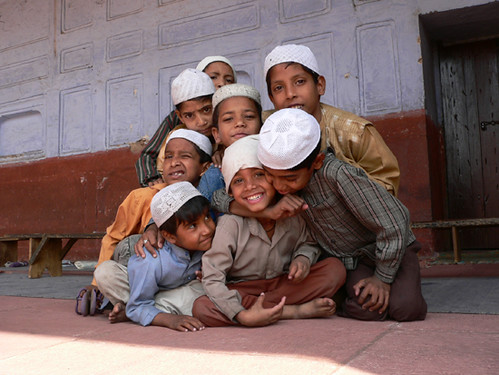
 Innocent brotherhood

As time has gone by, the people have gone further from the Prophetic way (of Islam and all the Prophets). And so the people have lost much of the sunnah and piety, so that the amount of sincere and righteous Muslims has decreased. It has fallen to such an extent that it has related to the increased selfishness in society.

As society and culture has become more selfish (through materialism, love of dunya etc), more people became influenced by the selfishness. And it kept increasing every decade (and even years at times), such that it has become the norm, and the path that people think is good and aspire to. They think its a "dog eat dog eat world", a "cut throat economy", and that we need to care for ourselves because no one will care for us. It became so accepted that people in general tended to think that there are no people who are pious, sincere or selfless. Thus they negated the existence of the Awliya (friends of Allah swt) of the present (and in many cases, of the past).

The selfish people (which is the norm in society, even amongst Muslims) struggle to overcome their selfishness (which includes their desires) if they try, and because of their ego, they think that if they can't do it (become selfless), then no one can. So they assume wrongly about the selfless people, deny their existence, and treat them like the selfless are selfish people. Since the Prophet said “A believer is a mirror of the believer.” [Abu Dawud], the selfish person is seeing his own selfishness in the other.

This leads to people who are struggling and want to be selfless, to be treated badly. They try to help others, and prefers others to themselves, and give sincere advice, yet the selfish person thinks "he must have a self-interest or bad intention in this, or must be weird, or let me just use him and ignore him when he's no use". Since these selfless people are often weak, the pressures and maltreatment of society makes them give up and think 'why should I be nice if everyone just uses me and thinks me as a fool if I'm nice?' Sometimes such struggling people might continue to fight the temptation to be selfish, but eventually they “crack” and convert. Even those who don't normally struggle, and are brought up as selfless people often convert to the selfish.  Thus the cycle of selfishness is vicious and converts more of the selfless to the selfish, leading to the eventual destruction of humanity through its becoming like animals (actually even worse since many animals sacrifice themselves for their species).


The selfish trait is valued by society since it fulfills the desires/nafs (as a person gets what s/he wants and self-interests) and increases consumption/profits (that's why firms encourage selfishness) and leads to greater competition. Many of these selfish people are actually normally nice, they may help in a lot of charitable activities, or outwardly act Islamic, but actually they are selfish due to their inner feelings and actions towards other people, using them for their goals, and assuming bad about them without clear reason. They need the purify their hearts, through the Islamic science of tasawwuf.

However Allah swt has promised us, through the Prophet, that there will continue to be selfless, righteous, people on the Earth. They are exemplars of Islam, and the real representatives of the Prophet, reminding people of how it must have been at the time of the Prophet, and how humans can reach the highest of stations, through selflessness and proper following of Islam. This is despite the vast majority of society having fallen prey to their desires and selfishness. The selfless will succeed eventually. The Prophet said “The Abdal (the 40 best people alive) from my nation did not enter into Paradise with their actions, but rather through the mercy of Allah, through the unparalleled generosity of their souls, the fact that they hold no grudge or hatred against anyone and their hearts being at peace with everyone, and through mercy for the entirety of Muslims.” (Bayhaqi)

So those who want to be selfless, yet are selfish, should not judge other people, nor treat them as if they are selfish, since verily they could be of the Awliya, and you may not know the hidden states of that person. Rather assume the best in people (as long as reasonable), and if you start treating people selflessly, and reminder others of it, and propagate Islam (through words and actions, such as importance of keeping your word and honesty). And if you find them make mistakes, remember that Ibn Munazil said ““The believer seeks excuses for their brethren, while the hypocrite seeks out the faults of their brethren.””

Look for the selfless people, the awliya (they can be male or female) so that their company helps improve you and make you of the selfless, and shows you that such people exist. If you look in the right place, you will insha’Allah find them.

Though the selfless are misunderstood and abused in society and are very rare, their status, rank, value and honour are elevated and make the best of people. It is like the more rare a diamond is, the higher its value.


The Qur'anic example (which is obviously real) that we should follow on selflessness is " …and give them preference over themselves even though they were in need of that" (59:9)

Friday, 23 March 2012

The Book of Earning- Book Review


The Book of Earning a Livelihood


“The Book of Earning a Livelihood” is an excellent and much needed book that is more relevant now than ever, since the age of materialism afflicts us with greater force than ever before. It may be the earliest book in economics (and Islamic economics) and when economics is defined according to its original definition of “household management”, this is one of the earliest books on the subject of economics (yes etymology is also discussed in the book).

The book is written by the one of the greatest Muslim scholars, Imam Muhammed ash-Shaybani (born 132 AH so is a very early book), the genius and leading Mujtahid and student of Imam Abu Hanifa, and teacher of Imam Shafi’i. Dr Adi Setia has done an excellent job in translating it, as he has been focusing on translating early Islamic texts related to economics.

 At the same time the book shows the comprehensiveness of Islam to encompass all aspects and relate them to each other so beautifully. That is beautifully expressed when the writer explains the Qur’anic verse “And help each other to kindness and conscience” (Ma’ida, v2)  as including helping and cooperating with other people through working/job (thus earning), which allows a person to then feed himself/herself and get enough energy to worship Allah swt.  This means for example that the person who initially helped the other through work (like giving a job or making clothes), will get the reward of the worship of the employee. Thus we get a new perspective in hiring employees, and in working, and in helping people (even feeding them), and the task of hiring people becomes one connected to Allah swt and reward, if the intention is correct.

The book is divided into 50 chapters and 3 appendixes in 330+ pages. It was supposed to be 1000 chapters, but the author died before he could write more, revealing the widespread knowledge of Imam Shaybani. As the title suggests discusses the various aspects related to earning and spending, often bringing thought provoking insights, and relates them to ethics, Islam and philosophy.

The chapters range from issues of whether gratitude when being rich is better or being patient when poor, whether one who gives money is better or the one who takes, whether marriage is better or worship, what is the limit to spending on oneself, is agriculture better than commerce, is work better than worship, how various trades relate to each other, dealing with wealth and so on, whilst using the Qur’an and Sunnah as evidence. It shows how the early scholars thought and related Islam to the day to day lives of the people.

The book emphasises the need of circulating money from the rich to the poor, instead of just between the rich, and to not do things that would make the poor jealous. This is done by discussions of the virtues of giving, and the obligation to give, and controlling one’s lifestyle.

Related to controlling our food appetites, a very interesting Hadith of the Prophet (Sallallahu alaihi wa sallam) is quoted about one of the signs of the Last Hour, which may refer to the modern idea of buffets where tables circulate round, and the bowls move round, is “large bowls (of food) are circulated around their table spreads, whilst (divine) condemnation descends on them” (pg 92, also similar in TIrmidhi).

In the appendix (which forms about 40% of the book) are a lot of gifts offered by Adi Setia to the readers since he includes excellent discussions on money management in Islam, a new vision of an Islamic gift based economy, and reflections over interfaith dialogue over tackling structural greed in society. One gets the immediate thought that Adi Setia is a new critical genius (he teaches Islamic philosophy of science and the Islamic worldview at IIUM) that the Muslim world should appreciate more. His ideas reflect the way that Muslims who brought the Muslim world to the golden age thought, i.e. by looking at different types of knowledge through an Islamic worldview, and critically and solidly engaging with them masha'Allah.
This is shown by how he gives a framework for the economy by using the Qur’an to show that man’s wants should be limited, that needs take priority, that there is an abundance of resources (contrary to the scarcity view of many people), and that man should turn to Allah swt since He will give more. So the revival of the world from its modern ecological destruction lies in returning to Allah swt.

In conclusion, though I only covered a few points in the review, this book is a welcome addition to both the Muslim and non-Muslim world, and applying its ideas leads to a new and refreshing step forward in solving many of the world’s problems.

Thursday, 22 March 2012

Fakhr ad-Din ar-Razi- Great Scholars of Islam


Muhammad ibn `Umar ibn al-Hasan ibn al-Husayn1 Abu `Abd Allah al-Qurashi, al-Bakri, al-Taymi, al-Tabaristani al-Shafi`i, known as Ibn al-Khatib and as Fakhr al-Din al-Razi (543-606), Shaykh al-Islam, the imam of the learned scholars of kalam and the foundations of belief, a major jurist of the Shafi`i school, specialist of usul, Sufi, commentator of the Qur'an, philologist, genealogist, heresiographer, logician, and physician. "An ocean that contains more pearls than the ocean." The principal spokesman of Ahl al-Sunna in his time, he refuted all the sects with which he came into contact, particularly the multifarious groups of the Mu`tazila, Shi`a, and Hashwiyya as well as  the Jews and Christians.

A student of his father Khatib al-Rayy Diya' al-Din `Umar and Majd al-Din al-Jili al-Maraghi principally, then Abu Muhammad al-Baghawi and Kamal al-Din al-Simnani, he memorized early on Imam al-Haramayn's work in kalam entitled al-Shamil. He began his scholarly career in poverty and died at sixty-three at the height of fame and wealth, poisoned, it is said, by the Karramiyya of Herat who were envious of his great following among the princes of Khurasan.

A superb teacher, al-Razi could debate and preach in both Arabic and Persian, and he answered gracefully and at length the questions of the scholars of all four schools in Herat. He would often break into emotional states while preaching, moving to tears whoever listened to him. He was expelled from Khwarizm and Transoxiana by the Mu`tazila and returned to his native Rayy where he authored a series of works which achieved widespread fame in a short time.

 Imam al-Razi said in his "Testament" (wasiyya):
 "I have explored the ways of kalam and the methods of philosophy, and I did not see in them a benefit that compares with the benefit I found in the Qur'an. For the latter hurries us to acknowledge that greatness and majesty belong only to Allah, precluding us from involvement into the explication of objections and contentions. This is for no other reason than because human minds find themselves deadened in those deep, vexing exercises and obscure ways [of kalam and philosophy].
 Therefore, I say that everything that stands established by literal proofs concerning the necessity of Allah's existence, His oneness, His exemption from any and all partners, as well as His beginninglessness and pre-existence, His disposal of all things, His exclusive efficacy: that is what I also believe, and what I hope to meet Allah with.
 As for what is ultimately subtle and unclear, as well as all that is mentioned in the Qur'an and the sound books of hadith that specifically bears one meaning: it is all exactly as the text says. Whatever is otherwise, I say: O God of the worlds, I see that all of creation concur that You are the most generous of all generous ones,  and the most merciful of them; therefore, concerning anything I wrote or thought, I bear witness that if You saw that I tried to declare true something false, or declare false something true, then do with me as I deserve; but if you saw that I only tried to declare transcendent whatever I considered truly transcendent, and believed so truthfully, then let Your mercy be commensurate with my intention, not with my outcome....
 As for the books which I authored and in which I listed and explicated countless questions, let whoever looks into them remember me kindly and pray for me out of compassion and benevolence, or else, strike out any wrong words. For I did not intend other than abundant investigation and the sharpening of thought, all the while relying upon Allah"
 Ibn al-Subki quotes the following lines of poetry from Imam al-Razi:
  "The daring of minds ends in shackles,   Most of mankind's undertakings are folly.   Our souls are indifferent to what our bodies do,   And the sum of our lives is affliction and harm.   We did not benefit from our lifelong search   Except in collecting what these said, and those.   Atop many a mountain men have triumphed   And gone, while the mountains remained.   How many men and states have we seen  Goaded to disappear one and all."


For more, see:
http://www.sunnah.org/history/Scholars/al_fakhr_al_razi.htm

Wednesday, 21 March 2012

Keep company of pious


Excellent video by Sheikh Saqqaf:
http://www.youtube.com/watch?v=e4azpa8hPtY&feature=player_embedded

Another benefit is the fact that the one who loves them, connects with them, and takes them as allies will be among them and merit Allah's love and entry into Paradise. 

This is supported by the mass-transmitted hadith: 

A person is with whom he loves.

It is also borne out by the hadith of Ahmad and others with a rigorously authentic chain from Ubada b. al-Samit in a raised form, who said, 

Allah Most High said,

My love is merited by those who love one another for My sake; My love is merited by those who maintain relationships for My sake; My love is merited by those who offer advice to each other for My sake; My love is merited by those who visit one another for My sake; and My love is merited by those strive to help one another for My sake. Those who love one another for My sake shall be on pulpits of light. Their position shall be envied by the Prophets, veracious, and martyrs.


FROM the book by Sayyid Muhammad b. Ja‘far b. Idris al-Kattani

The misleading nature of emotional speech and dehumanisation

An excellent article from Sheikhy Notes by Sheikh Arfan Shah:

http://sheikhynotes.blogspot.co.uk/2012/03/misleading-nature-of-emotional-speech.html


In declarations is magic,” (Al-Bukhari) the Prophet (may Allah bestow peace and blessings be upon him) eloquently put something that we need to understand.
Politicians know the art of manipulating words to inspire their audience. They have speeches that are well prepared and set out in manner to excite their audience into displays of arrogant partisanship. This is the problem with emotional speech it moves were sometimes the truth does not. The truth is almost always delivered in rational manner which is not the case for lies because lies are delivered in a manner that the person finds hard to deny.
This is not something specific to politics as this happens in all spheres of our lives. Many speakers get overexcited and we think that they are correct because our ear drums have taken a severe beating. This is almost never the case. Sit back and examine what the words that are actually said, then you’ll find ignorance and arrogance hiding in-between. This is the essence of misleading speech. It sounds wonderful but once you break it down then it is nothing but inflated speech without substance.

The cause?
Invariably the cause is partisanship. Rational examination of the ‘other’ side is never done as no quarter is given to them. No matter if the other side do any good or not, everything is discounted because we hate them therefore no good could ever come them.
So when we are all gathered together one of them speaks using foul and abusive language. We all accept it because if we do not them we will be accused of following the other side. Now we have truly entered a sect and now we are no longer part of the mainstream.

Mainstream Sunni Islam is not about partisanship nor is about following scholars who have twisted the Sunnah to allow them to swear and apostatize whole groups of Muslims. This has never been the case is Classical Sunni Islam.
Another cause, is when we experience difficulty and are unwavering in our response for immediate justice. The brutality of some regimes in the world has lead to many condemnations of certain leaders. Yet the Muslims seem to be totally unaware of how the leaders work. They will do anything in their power to hold onto power.

Killing is just nothing to many of them but do not let that fool you because think who are happily selling these regimes weapons? Do they care? The followers of the Prophets are being killed and they are counting the profits made in the arms trade. The innocent people count their dead relatives. Have we not seen oppressor before in the Muslim world? It is something new? Look at the story of Pharaoh and Musa (upon him peace). Many leaders won’t go unless they go in a box. And if you think the west is going to save you then you have been successfully brainwashed by western media.

Dehumanisation
Dehumanisation of Muslims is something that has happened for centuries but ask yourself one question, why? The answer is simple when you remove the humanity from someone them you ‘engineering consent’ to their murder. The war of terrorism has cost the lives of more innocent people that the actual terrorists. Innocent civilians such as those of Iraq and Afghanistan who had nothing to do with anything but because they lived in a land, they became targets. 


Recently sixteen civilians were killed by one of the occupying forces in Afghanistan. But who cares because they are subhuman anyway? Who cares about the brutality of the torture the Iraqi’s faced in secret airbases? Who cares about the Geneva Convention? Human rights who cares that only for us not them. Who calls for those when we do what we like to them because they are not with us they are against us! This is part of the diatribe that you will hear which lead the cost of the lives of innocents.
“Dehumanisation and attribution of blame reduce our ability to empathise with the victims in croding their human status and holding them responsible for their own fates.” (The New Order of war by Bob Breacher p.207.)
So ask yourself again is emotional speech misleading? You must answer yes especially when it’s not accompanied without any truth.

The media
The media is full of incorrect reports and false information but when you are constantly reminded of these things it becomes difficult to reject them. The media is full of reports that constantly dehumanise Muslims and for this reason the press has come under much scrutiny and not a moment too soon. Why hasn’t any wealth Muslim thought about purchasing a large broadsheet and put in balanced information? Why bother when I have my Ferrari and my football club? That’s all I need. None of it will benefit you in the afterlife.  
Why is it that we let the television talk you all night yet you no let an unrighteous person into your house? Yet the television is worse because its filling you with unrighteous thoughts and ideas. This is how they have conquered the mind of just about every individual who watches it. Take the television out of the house and throw it away! The box has colonized millions of minds forget about sending an army send a ship load of Televisions.

Beware!
Know there are people who want to influence you into thinking like them. They want you to tow the party line, they want to become like them. So its time to think and ponder about the information that you are being given, ponder the validity of it.
Think and research yourself look into at trusted sources of information then make your own mind up. Do not be a docile vegetable that accepts whatever you are told open your eyes and use your brain. If I was a non Muslim I would like to know what Islam is and not rely on the sources of misinformation that are being presented. Similarly, a Muslim should look at his own sources of misinformation and compare them to the classical sources. 

Tuesday, 20 March 2012

Islam Under Attack? Review of Malaysian Insider Article of Syazwan


My friend brother Syazwan has written another in the Malaysian Insider (1). After the previous disastrous and erroneous article by him, this one is much better Alhamdulillah.  When I refer to “author”, I mean Syazwan.

I liked that he highlighted the Prophetic mercy and gentleness, and that some of the stuff done in Malaysia aren’t actually Islamic. So he had a good aim in that, I guess trying to give a good image of Islam to non-Muslims.  And Muslims definitely need to become pro-active, instead of reactive. However he made some errors which I deem should be corrected insha’Allah.

The area I found problematic is on Erykah Badu. It seems like she didn’t know that having Allah as a name as tattoo is wrong, and she should be informed and corrected of that, with wisdom. Whilst the Prophetic hadith about the man who urinated in the Mosque shows that we should be gentle in correcting people, or should use ways of wisdom in correction, the author has made a misleading point.  

The author said “[the Prophet] let the Bedouin man be because he did not know any better.”, where as in fact the Hadith/narration states “The Messenger of Allah called him (Bedouin) over and said to him, “Any kind of urine or filth is not suitable for these masjids. Instead they are only [appropriate] for the remembrance of Allah, the Prayer, and the recitation of the Qur’an,”” (Muslim). So the Prophet did inform the Bedouin of the error. And the Bedouin said ““The Prophet (saw) stood before me – may my mother and father be ransom for him – and he (saw) neither cursed nor scolded nor hit [me]“ (Ahmed).

He made an erroneous claim when he said “even though the singer was able to perform in the most populous Muslim nation in the world: our neighbour Indonesia.” So basically he is saying that just because she could have her concert in Indonesia, she should be able to have it in Malaysia too. Its like saying that if Indonesia allows prostitution and corrupt leaders to have refuge in Indonesia, then Malaysia should do it too! Rather the correct way is that we shouldn’t compare Malaysia with other countries, except in trying to make Malaysia more Islamically correct. Furthermore we should compare Malaysia and its actions/policies with Islam, and make them more Islamic.

As for the idea of concerts, all traditional/Sunni scholars would agree that these concerts are haram since there’s 1) a woman singing in front of men, 2) she is not covering her awra (private parts like hair, chest etc), 3) has musical instruments, 4) singing songs that aren’t Islamic and don’t remind one of Allah swt. The combination of all of those factors make the concert haram. So when an event is haram, Muslims shouldn’t host them, and should actually try to ban them.

This is based on the Hadith where the Prophet (Sallallahu alaihi wa sallam) said: "Whoever amongst you sees anything objectionable, let him change it with his hand, if he is not able, then with his tongue, and if he is not even able to do so, then with his heart, and the latter is the weakest form of faith." (Muslim)

The Malaysian government did right for banning it (even if the reasons given are different) Alhamdulillah, and they should ban more haram stuff that destroys the morals of society.

The author tries countering it (I anticipate) by saying “Do we stop the photos from circulating on the Internet then? Should we shut down Google image search just to ensure that the vulnerable and fragile minds of our youngsters are protected from seeing the “evil” photo?”

In Islam, we are required to do our best in stopping an evil. So take the example of pornography. The Malaysian government should try its best to block pornographic sites, and shouldn’t give permission for them (or other haram) to be hosted in Malaysia. But for stuff beyond its control, it is not held responsible. It can’t stop google, since it leads to other good searches.

See the Hadiths (many of the hadiths are authentic. Note even the use of the feminine word for singer) where the Prophet said:
“When my Ummah begin doing fifteen things, they will be inflicted with tribulations, and (from those 15 things He said): “When female singers and musical instruments become common” (Sunan Tirmizi).

“Song makes hypocrisy grow in the heart as water does herbage” (Sunan al-Bayhaqi).

“On the day of Resurrection, Allah will pour molten lead into the ears of whoever sits listening to a songstress” (Recorded by Ibn Asakir & Ibn al-Misri).

Furthermore the writer says, about the picture of a female showing her awra, “For your information, this writer is looking at the photo (again) as he writes. Alhamdulillah! My faith is intact, insyaAllah.”
That admission of a sin is not something to be glad about.  The Qur’an says "Say to the believing men that they should lower their gaze and guard their modesty: that will make for greater purity for them: And Allah is well acquainted with all that they do” (Surah Nur, v30)

A Muslim is not allowed to look at the awra of another person on purpose. The Prophet said “The fornication of the eyes is looking at that which is forbidden.” (Muslim)


Sayyidina Anas said: “I was once on my way to see Uthman ibn Affan (RA) when I passed a woman on the way so I looked at her and my eyes focused upon her beauty. I then met Uthman who said to me: ‘a person comes to me with the signs of zina (fornication) apparent in his eyes. Do you not know that the zina of the eyes is looking. You will repent or i will punish you.’ I said: ‘a revelation sent down after the Prophet?’ he replied: ‘No, this is firasah (insight of believer)”.


In my humble opinion, I think the author has made the title misleading and grossly exaggerated the situation. People who propound the views that Syazwan refuted (like the raiding Mosque one) will never succeed, and will remaina  minority. Islam is not under major attack or threat from “conservatives”, but is from Islamophobes and ignorant Muslims, or westernised liberal Muslims who reject the Qur’an and Sunnah and instead invent an Islam that suits their desires. So the author would do much more benefit in tackling that issue and removing the ignorance of the knowledge of Islam amongst many ”Muslims.”

For the previous article of Syazwan Zainal, see: "A criticism of Islamic practices in Malaysia"
http://muslim-lion.blogspot.co.uk/2012/02/criticising-islam-malaysian-insider.html

1)      1) Islam under attack in Malaysia? By Syazwan Zainal http://www.themalaysianinsider.com/opinion/article/islam-under-attack-in-malaysia


River Nile and Sayyidina Umar ibn al-Khattab


The following is an amazing event which occurred during the life of ‘Umar ibn al-Khattab (RA), in which Allah (SWT) demonstrated a miracle and his immense mercy to the people of Egypt.
'Umar ibn al-Khattab (Radiyallhu 'Anhu), the second Khalifa, Amir Al Mu’meneen  assigned Amr bin al 'Aas (Radiyallhu 'Anhu) as the Governor in Egypt. One day some of the Egyptians came to 'Amr bin al 'Aas (Radiyallhu 'Anhu) and told him that every year they must sacrifice a beautiful young girl  (putting new nice clothes & jewelry) into the Nile River in order to make it flow. And if they don't sacrifice a girl, then the river will not flow and the nation will be deprived of water. Whereupon, 'Amr bin al 'Aas (Radiyallhu 'Anhu) said "This is a practice of Jahiliyya and you are not allowed to do this anymore”. Thus, in that particular year, the Egyptians did not sacrifice a young girl. Allah wished to test the people of Egypt by causing the Nile River to run short of water. The condition became so bad, that the people of Egypt threatened Amr bin al 'Aas that they would leave Egypt if he did not allow them to sacrifice a girl in order to flow the river.

After hearing this, 'Amir bin al 'Aas (Radiyallhu 'Anhu) wrote a letter addressed to 'Amir Al Mu'mineen, 'Umar bin al-Khattab (Radiyallhu 'Anhu) in which he wrote exactly what had happened and his response to the people of Egypt.  Umar (Radiyallhu 'Anhu) wrote two letters in response, one addressed to 'Amir bin al 'Aas (Radiyallhu 'Anhu) and the other one to the Nile River. In the first letter, he wrote that 'Amr bin al 'Aas had done the right thing and also instructed him to throw the second letter into the Nile River. The letter addressed to the Nile River read:

Bismillahir Rahmaanir Raheem


"From the servant of Allah and leader of the believers, Umar ibn al Khattab to the Nile River:
If you flow with your will because a girl is sacrificed to you, then know that we are not in need of you, but if you flow because it is Allah (SWT) who wills for you to flow, then flow."

It was reported that the next day, the Nile River was filled with 16 dirah (1 dirah is about 1 feet) and has never dried and will not dry until the day of Qiyamah!
Source: Al Bidaya wa an-Nihaya by Ibn Kathir.